Dinglewell Infant School
Music
Music
Intent
At Dinglewell Infant School we recognise that Music is a powerful and unique form of communication that can inspire and motivate children. It is a vehicle for personal expression which can play an important part in personal development. The intention of our music curriculum is first and foremost to inspire children to feel that they are musical and to develop a love of music. We focus on developing the knowledge, understanding and skills that children need to succeed in becoming confident listeners, composers and performers. Our curriculum introduces children to music from all around the world and across genres, teaching our children to respect and appreciate the music of all traditions and communities.
Our children will develop the musical skills of singing, playing tuned and untuned instruments, improvising and composing music and listening and responding to music. They will gain an understanding of the history and cultural context of the music that they listen to and learn how music can be written down. At Dinglewell Infants we recognise how music can help our children to develop transferable skills such as teamwork, leadership, creative thinking, problem-solving, decision-making and performance skills. These skills are vital to children’s development as learners and their lives outside of school and for their future.
Through music at Dinglewell Infant School we:
- Develop the skills, knowledge and understanding that children need to become confident listeners, composers and performers
- Inspire the children to be curious about music and show a respect for music from a variety of cultures and genres
- Succeed in becoming confident singers, listeners, composers and performers who are ready for the next stage of their musical journey
Our school values/curriculum drivers underpin all that we do at Dinglewelll Infant School and are integral to our music provision:
- Care – the children use the instruments and resources appropriately and with care
- Co-operation – they work together to create pieces of music and when singing together as a class or school. The children know that everyone has a valuable part to play and value one another’s ideas and opinions
- Creativity – they learn to express themselves and their ideas through music and song
- Honesty – the children develop the confidence to share their honest opinions about pieces of music and know that their opinions will be respected
- Respect – the children respect other people’s points of view about pieces of music and listen to music from other genres and cultures respectfully
- Responsibility – the children can be trusted to play the instruments appropriately and return them to where they are stored
Implementation
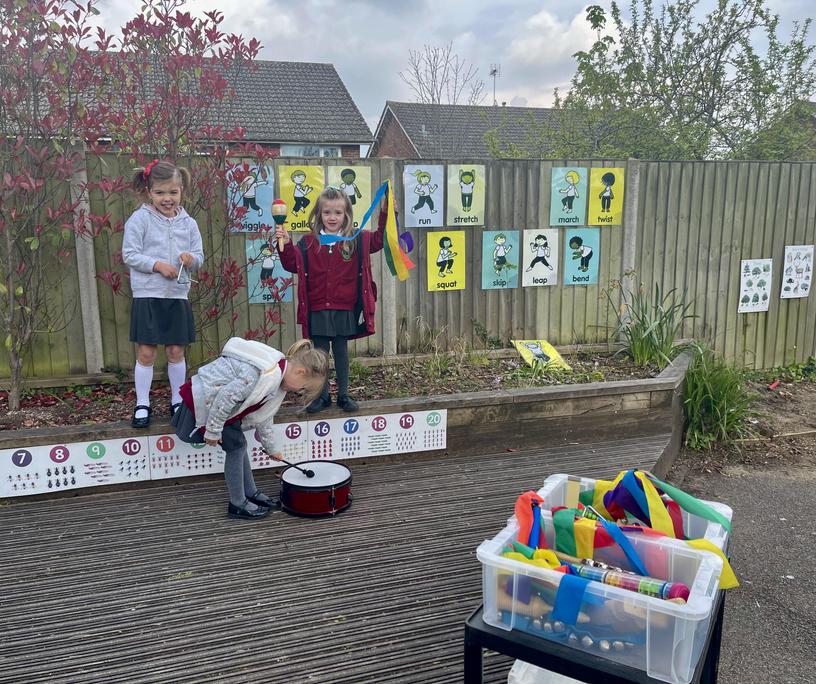
At Dinglewell Infant School we make music an enjoyable learning experience. We encourage children to participate in a variety of musical experiences through which we aim to build the confidence of all children. EYFS staff follow the Early Years Statutory Framework (2021) providing children the opportunity to sing songs and nursery rhymes, move to music and perform. To support this, the children have access to instruments both inside the classroom and also in outdoor provision. This gives the children plenty of time to explore and play with them and also incorporate them into their play.
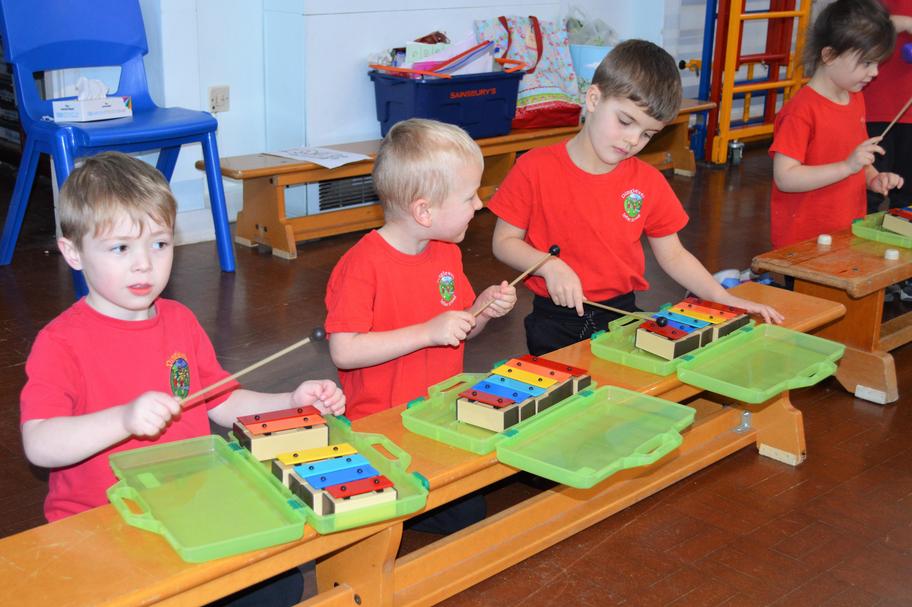
Throughout the school teachers follow the Kapow Primary Music Scheme of work, which ensures music is taught in a progressive sequence from EYFS to Year 2. This scheme takes a holistic approach to music in which the individual strands of listening, composing, performing and the history of music are woven together to create enriching and engaging learning experiences. The lessons are organised into units through a spiral curriculum that builds on previous learning. The lessons are ‘hands-on’ and incorporate movement and dance elements, as well as making cross-curricular links with other areas of learning. The children are taught to recognise and name the interrelated dimensions of music – pitch, dynamics, structure, tempo, timbre, duration and texture, and use these expressively in their improvisations, compositions and discussions of pieces of music they listen to. From EYFS to Year 2, our children are given opportunities to explore and play tuned and untuned instruments with increasing skill, accuracy and control. Composing and performing using body percussion and vocal sounds is also part of the curriculum, which helps to develop the understanding of musical elements without the added complexity of playing an instrument.
Singing lies at the heart of good music teaching and our teaching focuses on developing the children's ability to sing in tune and with other people. We come together as a whole school weekly for our Singing Assembly which is led by the Music Subject Lead. We sing carefully chosen songs to develop an enjoyment of singing and performing together. The children learn the importance of warming up their voices and how to sing in a variety of different formats including, rounds, chants, raps and call and response. Our children have opportunities to perform to an audience during events such as Harvest Festival and our Christmas performances.
Teachers continually use formative assessment during lessons and provide feedback ‘in the moment’ to ensure the children develop the necessary skills. This enables the children to make progress within the lesson and throughout the unit. Lessons or activities are adapted for individual children when necessary to ensure all children can access the learning or are stretched when necessary. Each unit taught culminates in a performance which is used for teachers to make a summative assessment of the children’s learning.
Extra-curricular opportunities
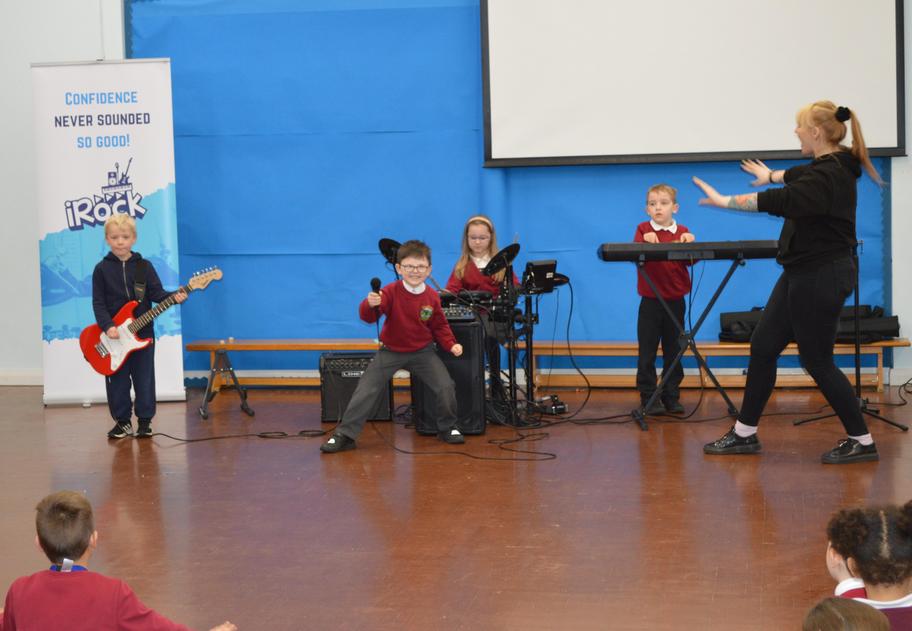
As a school we offer a number of opportunities for children with a passion for music, to develop their interest further. We work closely with iRock and children are able to join a band and receive weekly tuition to play the drums, guitar, keyboard or sing. The bands perform regularly throughout the year and enjoy showcasing their talents. The children not only develop their ability to play an instrument, but also grow in confidence and self-esteem.
Our Year 2 Lunchtime Choir Club is led by the Music Lead and takes place every Tuesday lunchtime. The children come together to sing a variety of fun and engaging songs while developing their confidence and enjoyment of music. The choir also provides an opportunity for pupils to learn new songs, which they then perform in our weekly singing assemblies and teach to the rest of the school. The club is extremely popular and is very well attended, reflecting the enthusiasm and commitment of the children involved.
Impact
By the end of Key Stage 1 our children will have gained the skills to help them become confident performers, composers and listeners who are able to express themselves musically at and beyond school. They will be able to demonstrate and articulate an enthusiasm for music and will be able to identify their own personal musical preferences. They will have gained an awareness of the ways in which music can be written down to support performing and composing activities. They will show a developing appreciation and respect for a wide range of musical styles from around the world. These skills, knowledge and understanding will prepare our children for the next stage of their music education.
The impact of our music curriculum is best shown through regular monitoring by the music coordinator. The coordinator monitors teaching and learning through completing learning walks, scrutiny of planning, observations, video evidence of performances, monitoring assessments, pupil voice conferences and by reading termly year group evaluations.
Knowledge and Skills Progression Map for Music
Vocabulary Progression Document for Music