Dinglewell Infant School
Computing
Computing
Intent
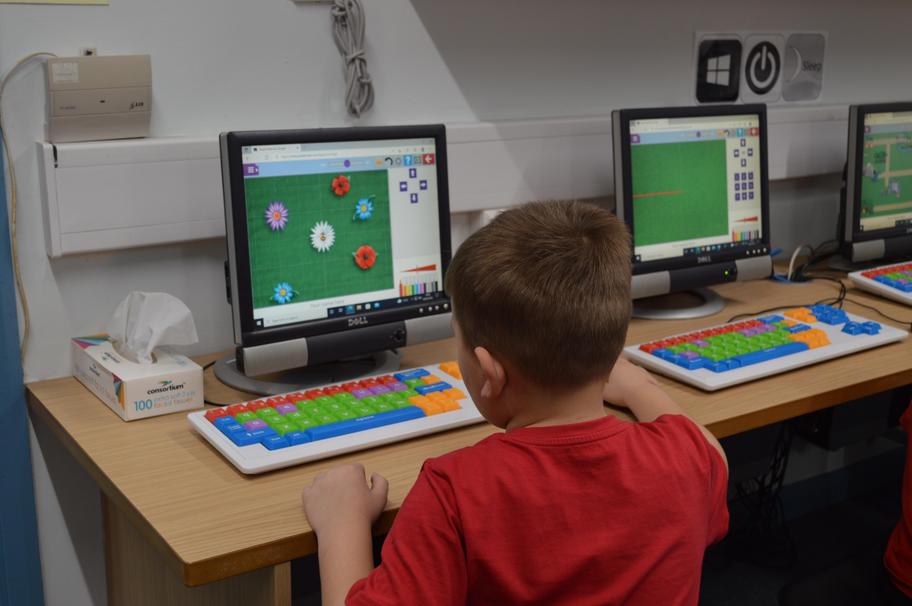
At Dinglewell Infant School we intend for children to become competent, responsible, confident, safe and proactive consumers of digital technologies. More importantly, we intend for them to become inspired and empowered to themselves become digital producers. At this early stage in their lives, we aspire for children to develop the basic knowledge and transferrable skills of computing; ensuring that technology is used creatively to engage learners and widen opportunities. This allows them to succeed by enhancing life and learning experiences in a rapidly evolving world of technology.
At Dinglewell Infant School we:
- Develop the basic skills and knowledge of computing
- Inspire the children to become confident, competent, safe and proactive consumers of digital technologies and thus empowering them to become digital producers
- Succeed in using technology as a tool to support and enhance learning both within school and the wider world.
Our school values/curriculum drivers underpin all that we do at Dinglewell Infant School and are integral to our computing provision:
- Care – Children know how to keep themselves safe when using technology and are educated to remain kind and courteous when working both offline and online
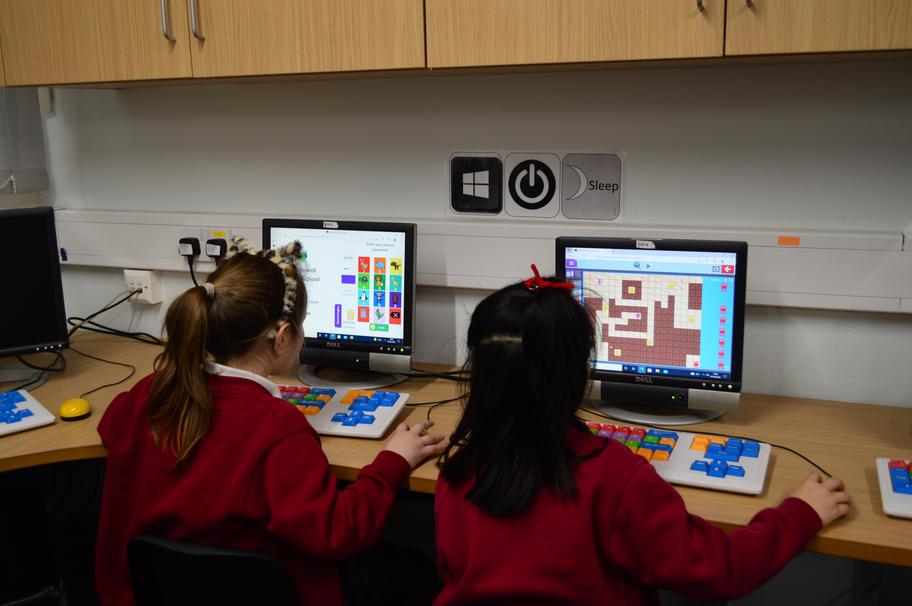
- Cooperation – Children work collaboratively to explore technology, share thoughts, ideas and solve problems
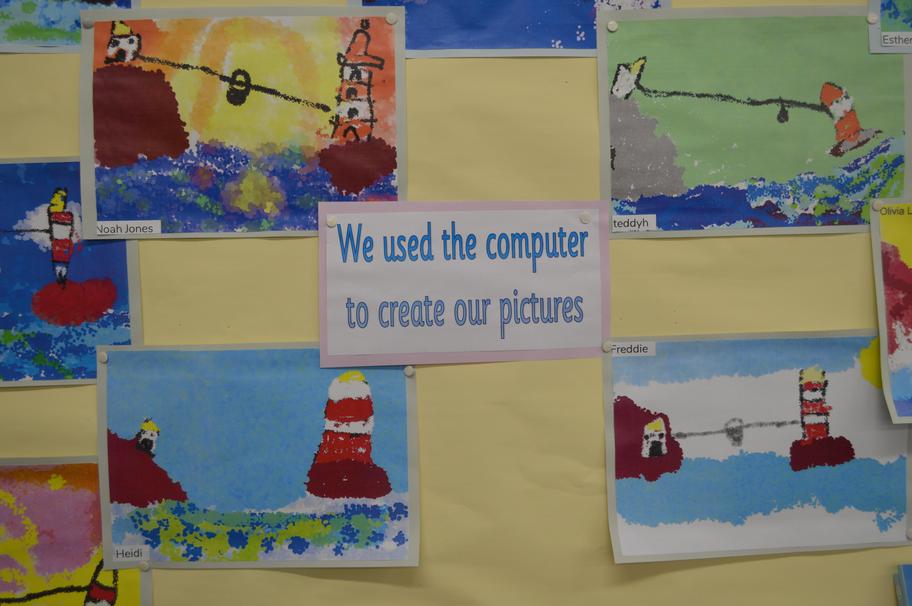
- Creativity – Children use technology in a creative way to inspire and develop computational thinking. We a strive to create confident creators of technology
- Honesty – Children are trusted to only visit appropriate websites and access age appropriate material
- Respect – Children respect ICT equipment and follow the acceptable use policy
- Responsibility – Children become responsible users of technology, understanding how they can be responsible and safe users and creators of technology
Implementation
Our children will need to have the flexibility of thought in order to take advantage of the pace of technological change in a rapidly evolving world. Our curriculum aims to offer a range of high quality and varied computing teaching.
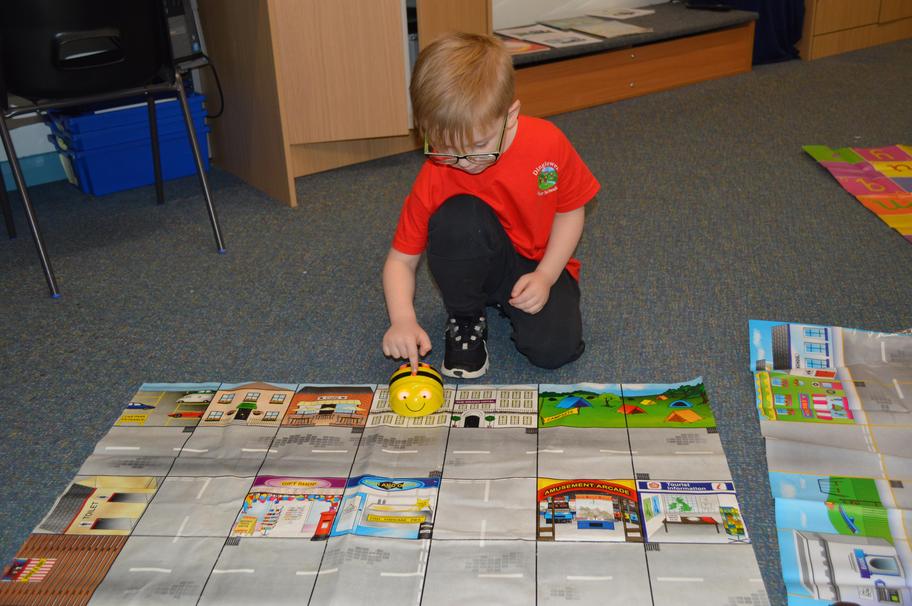
We intend to equip children with key technological vocabulary to enable them to explain their learning and understanding. Our curriculum aspires to promote and develop ‘computational thinking.’ We plan to develop children’s problem solving skills through our ‘computer programming’ strand of the curriculum. We want children to develop ideas about how digital systems work and use this within their own programming.
We recognise that although the benefits of technology are endless we have a responsibility to educate children to understand and appreciate how to be responsible users of technology. We want to create an environment where e-safety is regarded as an integral part of our everyday practices. We acknowledge that the children in our school generally have good access to technology at home. Our e-safety curriculum has close links with our PSED and PE wellbeing curriculum. We especially aim to help children and parents appreciate the detrimental effect that too much ‘screen time’ may have on young children’s wellbeing and the impact that this can have on their behaviour and learning.
Curriculum
The computing curriculum has been developed from the Computing programmes of study. It has been adapted from the ‘Elim’ Guidance. It is based upon the progression of skills in five strands
|
Programming |
E Safety |
Creative use of ICT |
Technology in our lives |
Data |
|
Understand what algorithms are, how they are implemented as programs on digital devices, and that programs execute by following precise and unambiguous instructions. Create and debug simple programs Use logical reasoning to predict the behaviour of simple programs |
Use technology safely and respectfully, keeping personal information private; identify where to go for help and support when they have concerns about content or contact on the internet or other online technologies |
Use technology purposefully to create, organise, store, manipulate and retrieve digital content |
Recognise common uses of information technology beyond school. Use technology purposefully to retrieve digital content from the school public drive and the Internet. |
Store and retrieve data and know some ways in which information is represented digitally |
Impact
Children are assessed against each strand of the curriculum as it is covered. Teachers identify children who are ready to progress or need extra support during session times. Formative assessment allows for teachers to plan an appropriate curriculum for children based on their individual needs. Summative assessment is completed at the end of each strand; teachers will summarize children’s learning in the whole of a strand identifying whether they have achieved, exceeded or are working below year group expectations. The Computing Lead will monitor and evaluate data. Children are encouraged to engage in self-assessment and peer assessment during sessions.
We feel that our intentions and the implementation of the curriculum will help children to understand that technology is a tool to transform the world and enrich their lives. Children will be able to turn their hand to any new technology presented to them by having well- developed resilience and adaptability. They will understand the need for balance and they will stay safe when working online; knowing when to ask an adult for help if they feel unsafe.
The impact of the computing curriculum is best shown through regular monitoring by the computing coordinator. The Computing Lead monitors teaching and learning through completing book looks, learning walks, scrutiny of planning, observations, monitoring assessments, pupil voice conferences and by reading termly year group evaluations.
Skills and Knowledge Progression Map for Computing
Vocabulary Progression Document for Computing